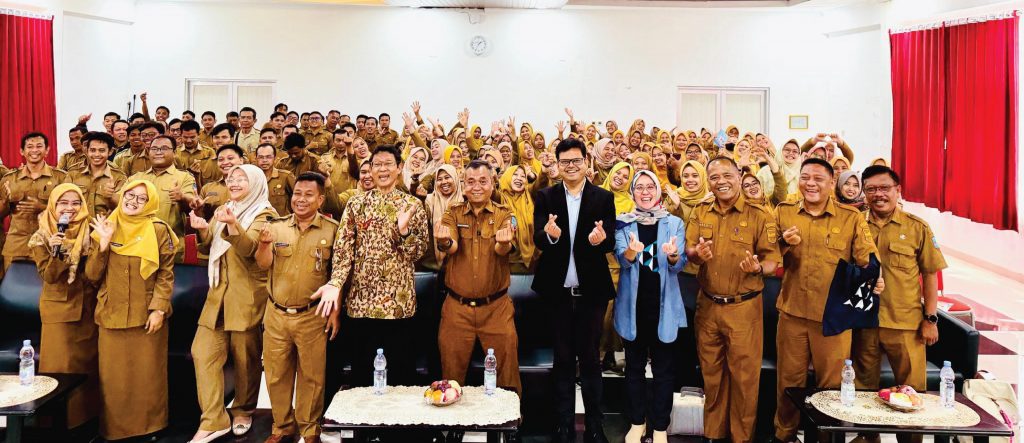
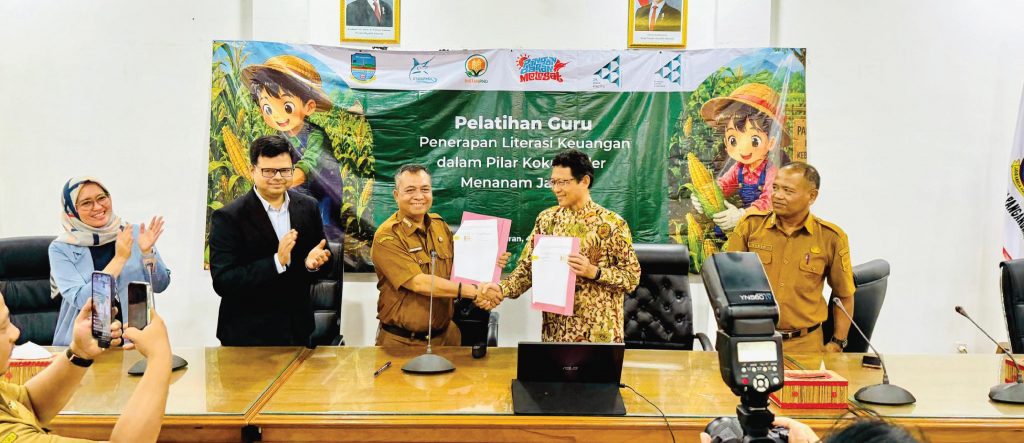
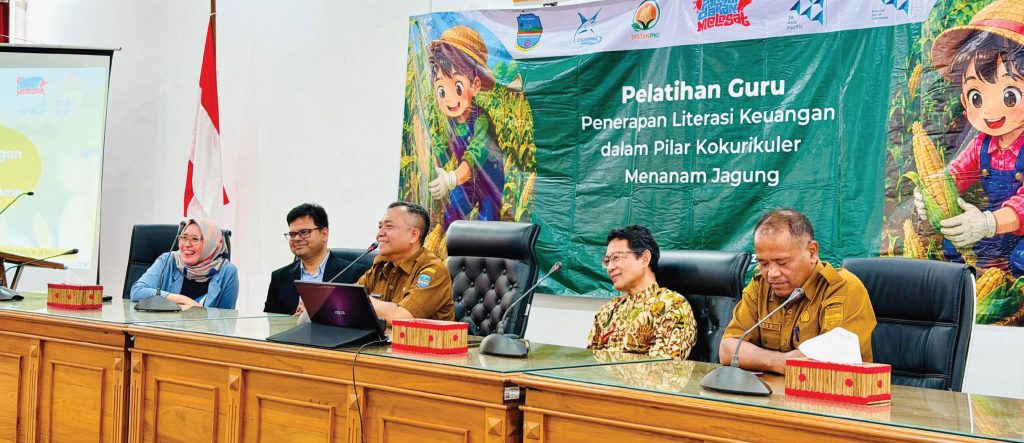
May 5, 2026 – Prestasi Junior Indonesia and the Pangandaran Regency Office of Education, Youth, and Sports have signed a new memorandum of understanding (MoU) to strengthen the integration of experiential financial literacy education into school learning. The signing event was attended by Vivek Kumar, the President and CEO of JA Asia Pacific, highlighting regional support for innovative education initiatives that connect financial literacy, sustainability, and youth development.
Through its pilot phase, more than 30,000 students from 768 schools across Pangandaran Regency will soon learn financial literacy not only from textbooks, but also through real-life experiences managing the results of corn harvests grown in schools. This approach makes the initiative one of the largest contextual financial literacy education programs implemented at the regional level.
The MoU marks a new chapter in the long-standing collaboration between PJI and the Pangandaran Regency Office of Education, Youth, and Sports, which has been ongoing for the past four years through the implementation of the Cha-Ching Curriculum. More than continuing an existing program, this new phase represents a strategic effort to institutionalize financial literacy education within school-based co-curricular activities.
What makes the initiative unique is its integration with Pangandaran Regency’s local food security agenda. Through school-based corn planting and harvest activities, students will learn financial concepts through direct and practical experiences that are closely connected to their daily environment and local community priorities. Corn cultivation itself has become one of the strategic food security programs promoted by the local government as part of broader efforts to strengthen regional resilience, environmental awareness, and community empowerment.
By using agricultural activities as a learning context, the program aims to make financial education more practical, engaging, and relevant for students across early childhood, elementary, and middle school levels. Students will not only learn about planting and harvesting, but also gain exposure to basic financial management concepts — including understanding the value of harvest outcomes, managing money, saving, and making simple financial decisions. At the same time, the initiative integrates character education, environmental awareness, collaboration, and responsibility into the learning process, creating a more holistic educational experience for students.
To ensure the learning materials are aligned with students’ developmental stages, the program utilizes different educational modules for each school level:
- Early childhood students will use the JA Ourselves module, introducing basic concepts of self-awareness, roles, and simple money management;
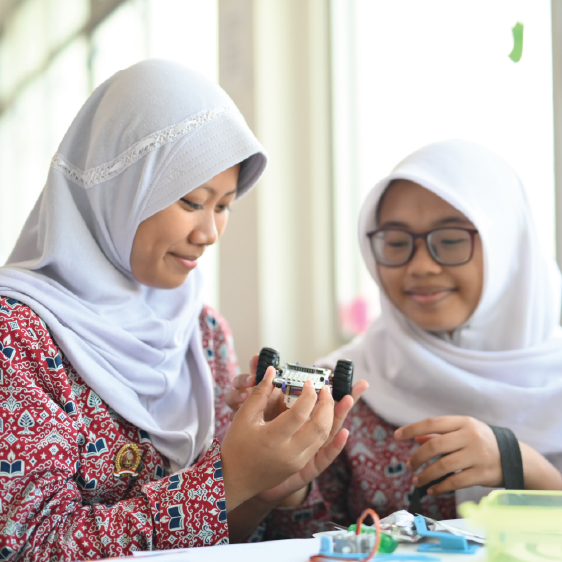
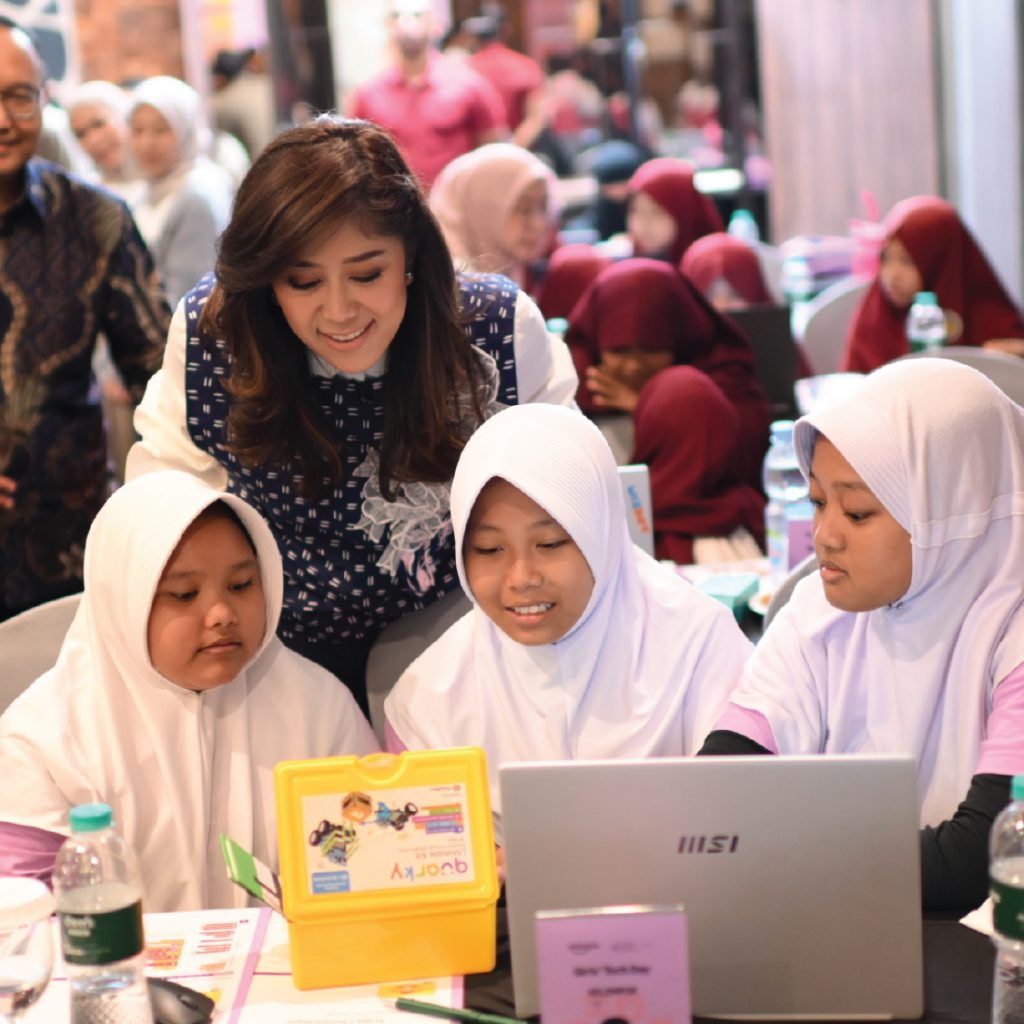
- Elementary school students will learn through the Cha-Ching Curriculum, focusing on earning, saving, spending, and donating; and
- Middle school students will use the JA More than Money program, which strengthens understanding of financial responsibility, entrepreneurship, and community impact.
The collaboration also includes teacher training, learning materials and facilitators, monitoring and evaluation, certification for teachers, as well as operational support for participating schools.
Beyond strengthening students’ financial literacy from an early age, the initiative is also expected to improve teacher capacity in delivering experiential learning and encourage stronger alignment between education and regional development priorities. At a broader level, the collaboration demonstrates how partnerships between local governments and non-profit education organizations can support more adaptive, contextual, and locally relevant curriculum implementation.
By connecting financial literacy education with food security and environmental learning, Pangandaran Regency and PJI aim to prepare students not only academically, but also with practical life skills and deeper understanding of their role within local economic and community development.